01Portable, inverter, or standby — what each one is for
Fuel-burning generators fall into three broad groups. They overlap a little, but each is built around a different job, and buying the wrong type is the most common expensive mistake.
Conventional portable
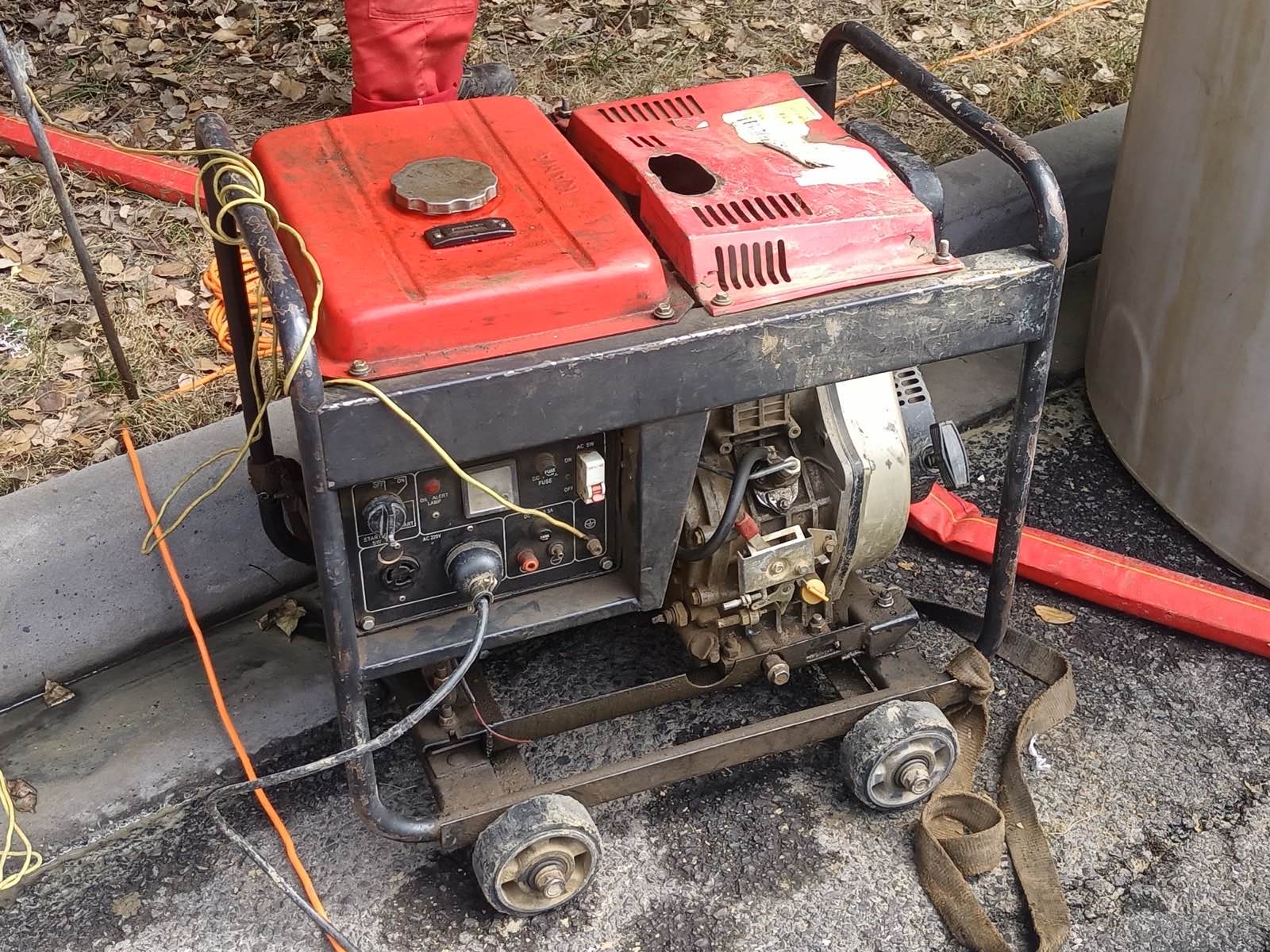
The wheeled open-frame unit most people picture. Lots of watts for the money, but loud, and the power is fine for motors and lights rather than tuned for electronics.
Inverter
Quieter, more fuel-efficient at light loads, and produces clean power that's safe for computers and medical gear. Small models are easy to carry; larger ones cost more per watt.
Standby
Permanently installed outside on a pad, runs on natural gas or propane, and starts on its own when the grid drops. The most convenient option and by far the biggest project.
| Type | Typical output | Noise | Fuel | Best for |
|---|---|---|---|---|
| Small inverter | Roughly 2,000–3,500W | Quiet | Gasoline (some dual fuel) | Fridge, lights, phones, CPAP |
| Large inverter | Roughly 4,000–9,000W | Moderate | Gas, propane, or tri-fuel | Several essential circuits through a transfer switch |
| Conventional portable | Roughly 4,000–10,000W | Loud | Gas or dual fuel | Maximum watts per dollar |
| Standby | Roughly 10,000–26,000W | Moderate | Natural gas or propane | Hands-off whole-house or near-whole-house backup |
02Add up what you actually need to run
Sizing comes down to two numbers. Running watts is what a device draws once it's going. Starting watts is the brief surge a motor or compressor needs to get moving — and it's often two to three times higher. Your generator has to cover all your running loads plus the single biggest startup surge.
- List the must-haves
Think in terms of a long outage, not a cozy evening. Refrigerator, freezer, sump pump, furnace blower, well pump, a few lights, phone charging, and any medical equipment.
- Find each device's wattage
Check the nameplate sticker, or the manual. If you only see amps, multiply by the voltage (120V or 240V) for an approximate watt figure.
- Total the running watts
Add up everything you plan to run at the same time. Leave yourself a cushion of about 20 percent so the generator isn't running flat-out for days.
- Add the largest starting surge
Only one motor usually starts at a time, so add the biggest single surge — often the well pump, sump pump, or a window AC — on top of your running total.
- Stagger the big loads
Start motors one at a time and let each settle before switching on the next. That alone lets a mid-size generator handle a surprising amount.
| Appliance | Running load | Startup surge |
|---|---|---|
| Refrigerator | Low to moderate | High |
| Chest freezer | Low | High |
| Sump pump | Moderate | Very high |
| Furnace blower (gas furnace) | Moderate | Moderate to high |
| Window AC | Moderate to high | High |
| Well pump (240V) | High | Very high |
| Lights, router, phone chargers | Very low | None |
Generators by household size
Honda EU2200i 2,200W Inverter Generator
A compact, well-regarded inverter for running a fridge, lights, and electronics on a single extension-cord setup.
Check price on AmazonWEN 56432i 4,500W Inverter Generator
A mid-size inverter that gives you more headroom for a fridge, freezer, and sump pump without the noise of an open-frame unit.
Check price on AmazonChampion 9,000W Tri-Fuel Inverter Generator
Runs on gasoline, propane, or natural gas, with enough output to carry several essential circuits through a transfer switch.
Check price on AmazonGenerac Guardian 22kW Standby Generator
A permanently installed standby unit that starts automatically during an outage; needs a licensed electrician and gas hookup.
Check price on Amazon03Get power into the house the right way
There are really only two safe ways to use a portable generator — heavy-duty extension cords run to individual appliances, or a properly installed transfer switch or interlock that feeds selected circuits. Anything else risks the people working on the lines and your own wiring.
Extension cords
- Cheapest way to start
- Use outdoor-rated, heavy-gauge cords
- Only powers plug-in appliances
- Can't run furnaces or hardwired well pumps
- Cords through a cracked door can let CO in
Transfer switch or interlock
- Feeds chosen circuits from your panel
- Runs hardwired loads like the furnace
- Isolates the house from the grid
- Needs a licensed electrician and usually a permit
- Generator plugs into an outdoor inlet box
- Pick your circuits
Work with the electrician to choose six to ten circuits — kitchen fridge, sump pump, furnace, a few lights — that match your generator's output.
- Match the inlet and cord
The inlet box and generator cord need matching plugs and amperage, typically a 30-amp or 50-amp twist-lock. Confirm before you buy either.
- Practice the switchover
Run through the sequence once in daylight — start the generator, plug in, flip the switches — so you're not learning it by flashlight.
Hookup and safety gear
Reliance Controls 31410CRK Transfer Switch Kit
A manual transfer switch kit for feeding a set of household circuits from a portable generator through a single cord.
Check price on AmazonKidde Plug-In CO Detector with Digital Display
A plug-in carbon monoxide alarm with battery backup and a numeric readout, useful near sleeping areas when a generator is running outside.
Check price on Amazon04Store fuel so it's ready when you need it
In a wide-area outage, gas stations often can't pump. The fuel you have on hand when the storm hits may be all you get for several days, so plan around it.
- Know your burn rate
Check the manual for run time at half load. Multiply out how many gallons, or how many propane tanks, a three-day outage would take.
- Treat gasoline and rotate it
Untreated gas can start to break down within a few months. Add fuel stabilizer when you fill the cans, and pour older fuel into your car so the stock stays fresh.
- Store it outside the living space
Keep approved containers in a detached shed or well-ventilated area away from the water heater, furnace, and any flame. Check local rules on how much you're allowed to keep.
- Keep propane tanks upright and outdoors
Never store or refill propane tanks indoors or in a garage. A few spare filled cylinders is the simplest long-term fuel reserve.
- Run the generator monthly
Start it and put it under some load for 15–20 minutes. A machine that sat all year with old gas in the carburetor is the one that won't start.
Conventional portables with fuel options
Generac GP7500E 7,500W Dual Fuel Generator
A conventional portable with electric start that runs on gasoline or propane, sized for a handful of essential circuits.
Check price on AmazonDuroMax XP5500EH Dual Fuel Generator
A mid-size open-frame unit that lets you switch between gas and propane depending on what you can get.
Check price on AmazonWestinghouse 9,500W Dual Fuel Generator
Higher output for homes that want to cover a well pump or more circuits at once, with a choice of fuel.
Check price on AmazonChampion 4,375W Remote Start Portable Generator
A smaller portable with a remote start fob, handy when the generator sits out of reach in the rain.
Check price on Amazon05Carbon monoxide — the rules that keep people alive
Generator exhaust contains carbon monoxide, which you can't see or smell. Poisonings spike after nearly every major storm, and many happen because a generator was run somewhere that felt sheltered — a garage, a basement, a porch.
- Run it outdoors only, at least 20 feet from the house, with the exhaust pointed away
- Never in a garage, basement, crawlspace, shed, or enclosed porch — even with doors open
- Keep it away from your neighbors' windows and air intakes too
- Use a generator tent or canopy designed for wet weather instead of moving it closer to shelter
- Install battery-powered or battery-backup CO alarms on every level and near bedrooms
- Know the symptoms: headache, dizziness, nausea, confusion — get to fresh air and call 911
If a fuel generator doesn't suit your home — you're in an apartment, you can't store fuel, or you need power indoors — a battery power station may be the better fit. Our backup power guide covers those options.
Free download
The generator readiness checklist
A printable sizing worksheet and pre-storm routine, so your generator starts and powers the right things when it counts.
- Appliance wattage worksheet
- Transfer switch questions for your electrician
- Fuel storage and rotation log
- Monthly test-run routine
- CO safety placement diagram
One email with your checklist, then occasional seasonal reminders. Unsubscribe anytime. See our privacy policy.


