01Four sizes of battery backup, from pocket to panel
Battery backup comes in a few clear sizes. Most homes end up with more than one — a power bank in every bag, a portable station for the essentials, and maybe something bigger if outages are frequent or long.
Power banks
Pocket-size batteries that charge phones, tablets, and small lights. Cheap enough to keep one per person.
Portable power stations
Suitcase-size units with wall outlets, USB ports, and a built-in inverter. Run a fridge, CPAP, router, or lights for hours to a day or more.
Expandable home systems
Large power stations that add extra battery packs and can connect to a home panel through a transfer switch, covering selected circuits.
Whole-home batteries
Wall-mounted systems installed by an electrician, usually paired with rooftop solar, that switch over automatically when the grid drops.
| Tier | Approximate capacity | What it can handle | Installation |
|---|---|---|---|
| Power bank | Phone-scale (tens of watt-hours) | Phones and small USB devices | None |
| Portable power station | Roughly 300–2,000Wh | Fridge, CPAP, router, lights, laptop | None — plug in directly |
| Expandable system | Roughly 2,000Wh to tens of kWh | Selected household circuits | Transfer switch or panel kit recommended |
| Whole-home battery | Typically 10kWh and up | Most or all of the house for a period | Professional install and permits |
02Size a battery by what it has to run, and for how long
Batteries have two ratings that matter. Output (watts) is how much it can deliver at once — it decides what you can plug in. Capacity (watt-hours) is the size of the tank — it decides how long things run. A big-output, small-capacity unit will start a microwave but drain in minutes.
- List what you want to keep on
Be ruthless. A fridge, a medical device, the router, phone charging, and a few LED lights is a realistic target for a portable unit.
- Estimate daily watt-hours
Multiply each device's watts by the hours it runs per day. A fridge cycles on and off, so its daily use is far lower than its label wattage times 24.
- Add a margin for losses
Converting battery power to AC outlet power wastes some energy. Plan on getting noticeably less than the rated capacity — budget for roughly 80 to 85 percent.
- Check the output rating
Make sure the continuous output covers everything running at once, and that the surge rating handles a fridge compressor kicking on.
- Decide how you'll recharge
Capacity matters less if you can refill it daily from solar panels, a car, or a generator. Without a recharge source, the battery size is your whole outage.
Portable power stations
Jackery Explorer 1000 v2
A mid-size station for lights, phones, a router, and a CPAP through a night or two, light enough to carry room to room.
Check price on AmazonEcoFlow DELTA 3 (1,024Wh)
A roughly 1kWh unit with standard outlets that can keep small essentials running and recharge from wall, car, or solar.
Check price on Amazon03Add solar so the battery refills itself
Solar turns a battery from a countdown into something closer to a renewable supply. Even a modest set of portable panels can put back a meaningful share of a day's use when the sun is out — which is often the case in the days after a storm passes.
Portable folding panels
- No installation
- Set out in the yard or on a deck
- Output drops sharply in clouds or shade
- Good match for portable power stations
Rooftop solar with a battery
- Installed by a contractor
- Recharges a home battery automatically
- Needs the right inverter to work during an outage
- Larger upfront cost with potential incentives
- Match panels to the station's input
Check the maximum solar input wattage and voltage range on your power station before buying panels, and use compatible connectors.
- Angle panels toward the sun
Flat panels on the ground underperform. Prop them up facing south (in the Northern Hemisphere) and move them as the shade shifts.
- Keep the battery out of direct heat
Panels belong in the sun; the battery doesn't. Run the cable to a shaded spot or indoors.
04Battery or generator — choosing what fits your home
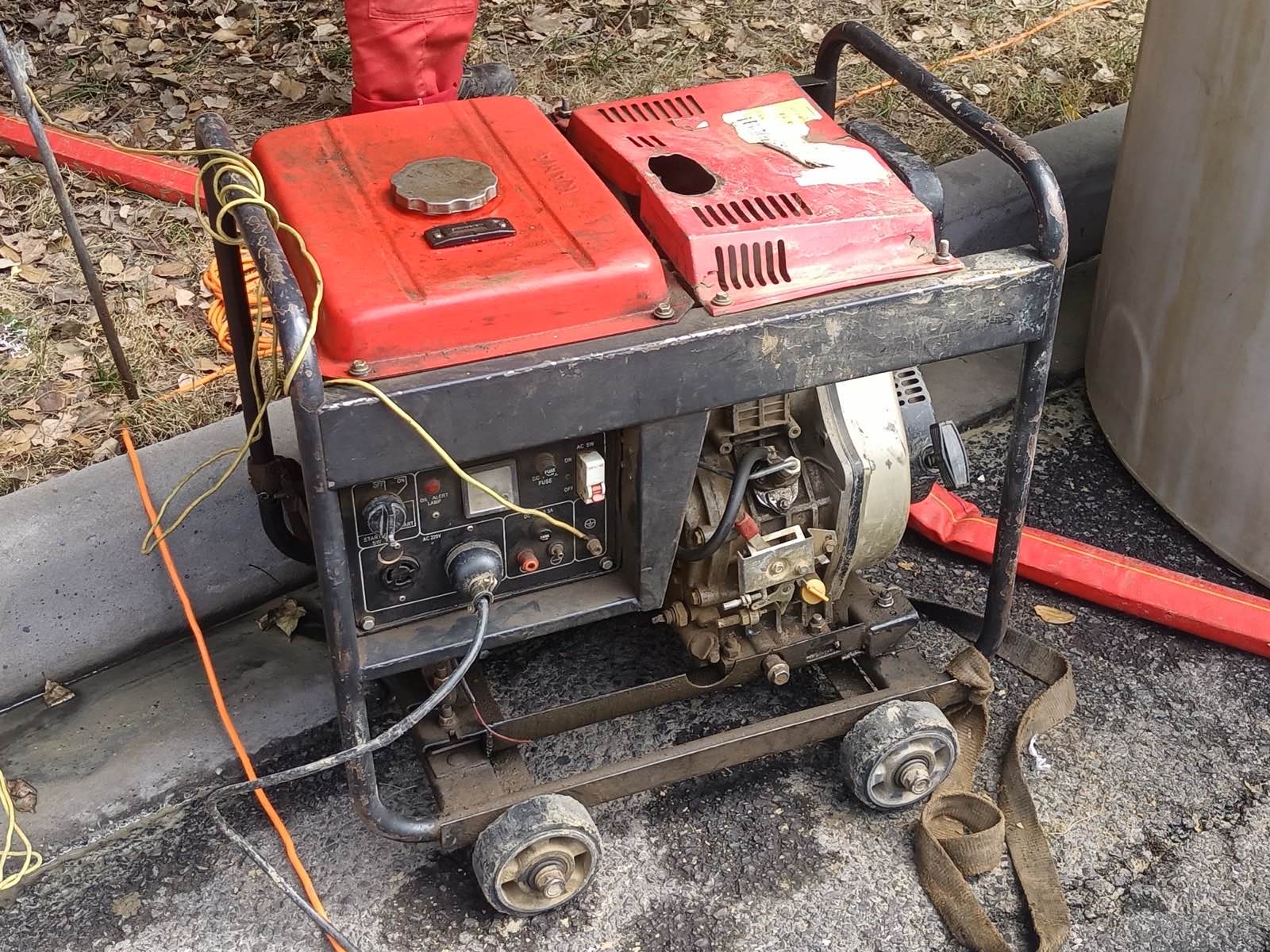
Batteries and fuel generators solve the same problem differently. A battery is quiet and safe indoors but finite. A generator keeps going as long as you can feed it, at the cost of noise, fuel storage, and carbon monoxide risk. Our generator guide covers the fuel side in detail.
| Factor | Battery power station | Fuel generator |
|---|---|---|
| Where it runs | Indoors or out | Outdoors only — far from the house |
| Noise | Near silent | Moderate to loud |
| Exhaust and CO | None | Significant — needs CO alarms |
| Runtime | Limited by capacity unless recharged | As long as you have fuel |
| Maintenance | Occasional top-up charge | Oil changes, fuel rotation, test runs |
| Big loads like well pumps or central AC | Only large systems | Mid-size and larger units |
| Upfront cost per usable power | Higher | Lower |
A battery makes sense if
- You live in an apartment or condo
- Outages are usually hours to a day or two
- You need to power medical equipment indoors
- You don't want to store fuel
A generator makes sense if
- Outages regularly last several days
- You need to run a well pump or heating system
- You have safe outdoor space for it
- You can store and rotate fuel
Bigger battery systems
Generator guide →EcoFlow DELTA Pro Ultra Power Station
A modular, expandable battery system designed to connect to a home panel and back up selected circuits.
Check price on AmazonJackery HomePower 2000 Plus v2
A step up from mid-size stations for households that want longer runtime on a fridge and other essentials.
Check price on Amazon05Keep batteries charged and ready between outages
A battery that's been sitting in a closet at 10 percent for a year won't help much. A few habits keep everything ready.
- Top up power stations and power banks every few months, and before any forecast storm
- Store them in a cool, dry place indoors — extreme heat and cold shorten battery life
- Check the manufacturer's recommended storage charge level; many suggest partial rather than full or empty
- Run a real test once a year by powering the fridge or CPAP for a few hours
- Keep the right charging cables, car adapter, and solar connectors stored with each unit
- Charge every phone, laptop, and power bank the day before a storm arrives
Small stuff that matters
Emergency kit guide →Anker 737 Power Bank (24,000mAh)
A high-capacity power bank that can charge a phone several times and many laptops over USB-C.
Check price on AmazonMidland ER310 Emergency Weather Radio
An emergency radio with NOAA weather alerts and hand-crank or solar charging, so news doesn't depend on your batteries.
Check price on AmazonFree download
The battery backup planning sheet
A printable worksheet to tally your loads, size a battery, and keep it charged and ready between outages.
- Device watt-hour worksheet
- Battery vs. generator decision guide
- Solar recharge planning notes
- Quarterly charge-and-test reminder log
One email with your checklist, then occasional seasonal reminders. Unsubscribe anytime. See our privacy policy.